
For Practitioners
Systems-Based
Microbiome Analysis
Analyzing the gut microbiome by looking at collective functions, metabolic pathways, and system impacts — rather than just listing individual bacterial species — is the modern standard in microbiome science.
The Analysis Program
Weighted Analysis from GI-MAP, MycoToxin Testing, Additional Labs & Patient Symptoms
This analysis program produces a weighted, systems-based interpretation of Diagnostic Solutions' GI-MAP and MycoToxin test results. Rather than reporting individual bacterial species in isolation, the program maps findings across collective metabolic pathways and system-level impacts — delivering clinically actionable insight.
The analysis follows the latest peer-reviewed research and is updated consistently to reflect emerging science in microbiome medicine, immune function, and integrative health.
Offered to practitioners who work with Diagnostic Solutions' GI-MAP and various MycoToxin tests, this service provides a deeper layer of interpretation to support your clinical decision-making and patient outcomes.
Key System Impacts Analyzed
Chronic Inflammation & Dysbiosis
Microbial imbalance driving persistent systemic inflammatory load
Immune Dysregulation & Attenuation
Secretory IgA, eosinophil activation, and mucosal immune tone
Autoimmune & Hypersensitivity Pathways
Molecular mimicry, antigen translocation, and immune cross-reactivity
Oxidative Stress & Mitochondrial Load
Reactive oxygen species burden and cellular energy disruption
Intestinal Permeability (Leaky Gut)
Tight junction compromise, endotoxemia, and systemic antigen exposure
Gut–Brain Axis & Neurological Impact
Neurotransmitter production, vagal signalling, and cognitive load
Cardiovascular & Metabolic Risk
TMAO pathways, lipid metabolism, and cardiometabolic dysregulation
Hormonal & Endocrine Disruption
Estrobolome activity, cortisol signalling, and hormone metabolism
Collaboration Models
Ways We Can Work Together
Whether you need a single analysis or an ongoing clinical partnership, there is a collaboration model designed to fit your practice.
Patient Review Meetings
Joint case review sessions where we walk through the weighted analysis together — interpreting findings, discussing clinical priorities, and aligning on next steps for your patient.
Full Protocol Curation
A comprehensive, practitioner-ready protocol built from the weighted GI-MAP and MycoToxin findings — covering targeted interventions, sequencing, and dosing considerations.
Patient Health Coaching
Direct health coaching support for your patients — translating the analysis into actionable lifestyle, nutrition, and behavioural strategies they can implement with confidence.
Tests Covered in This Analysis
GI-MAP
Diagnostic Solutions' DNA stool analysis by quantitative PCR — maps the gut microbiome including pathogens, commensal bacteria, fungi, viruses, parasites, and intestinal health markers.
MycoToxin Testing
Various mycotoxin panels assessed for mold-related immune burden, oxidative stress, and systemic inflammatory load — integrated into the weighted analysis alongside GI-MAP findings.
EVVY Vaginal Microbiome
Metagenomic sequencing of the vaginal microbiome — identifying bacterial and fungal communities, community state types, and inflammatory markers. The vaginal and gut microbiomes are directly connected, making both essential to a complete picture.
Additional testing and symptoms can be added to the Integrated Analysis document. It is key to include as much information as possible — the more context provided, the more precise and actionable the analysis result.
Sample Report
What a GI-MAP Looks Like
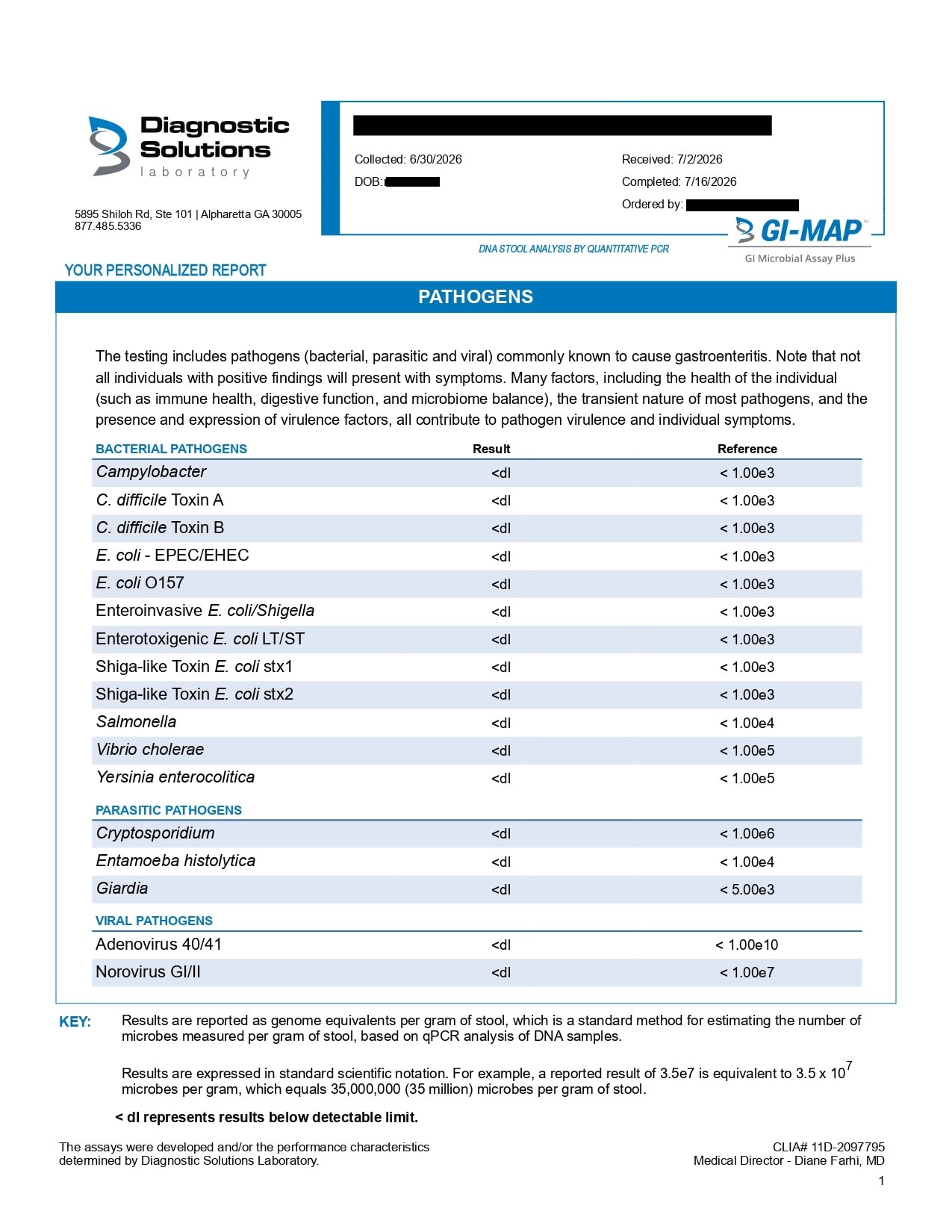
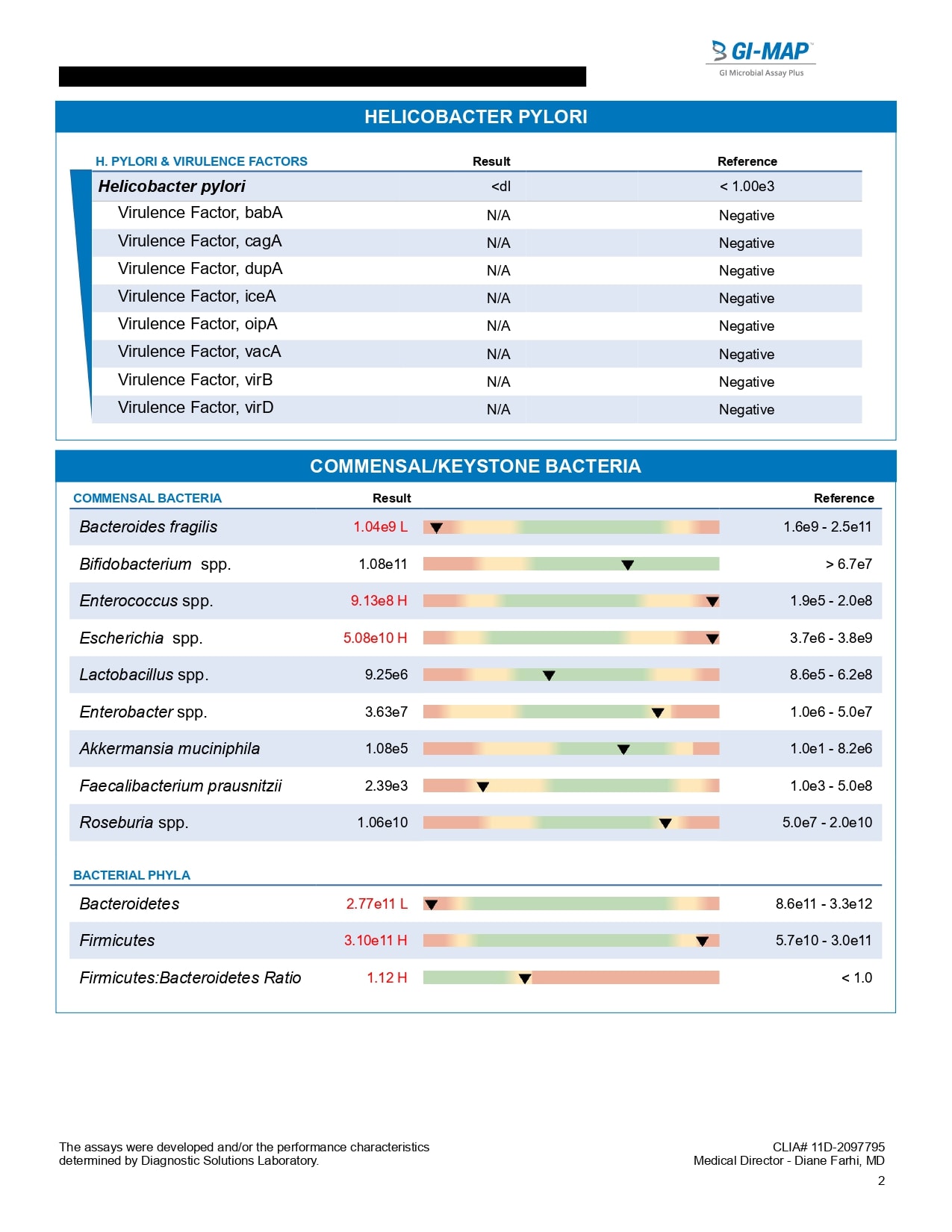
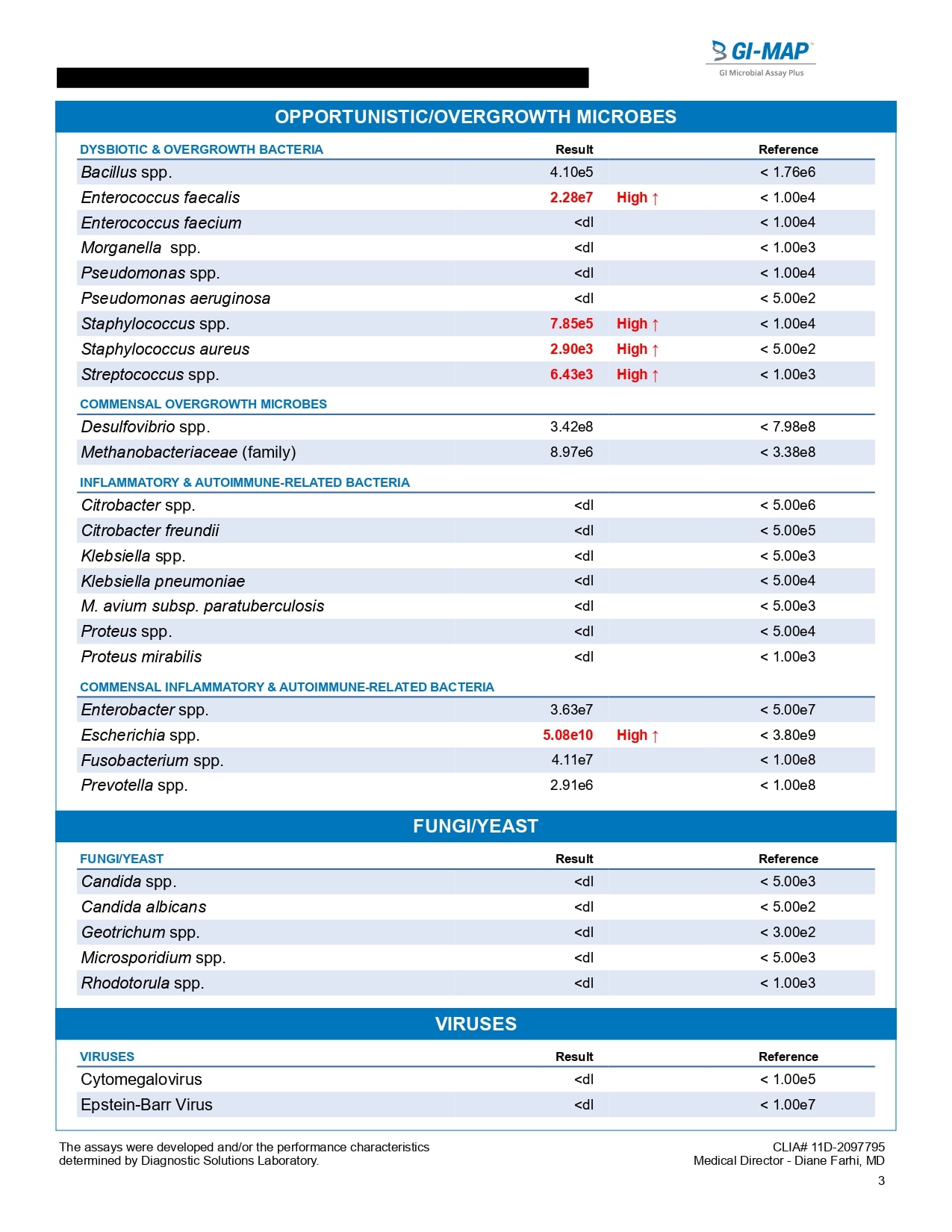
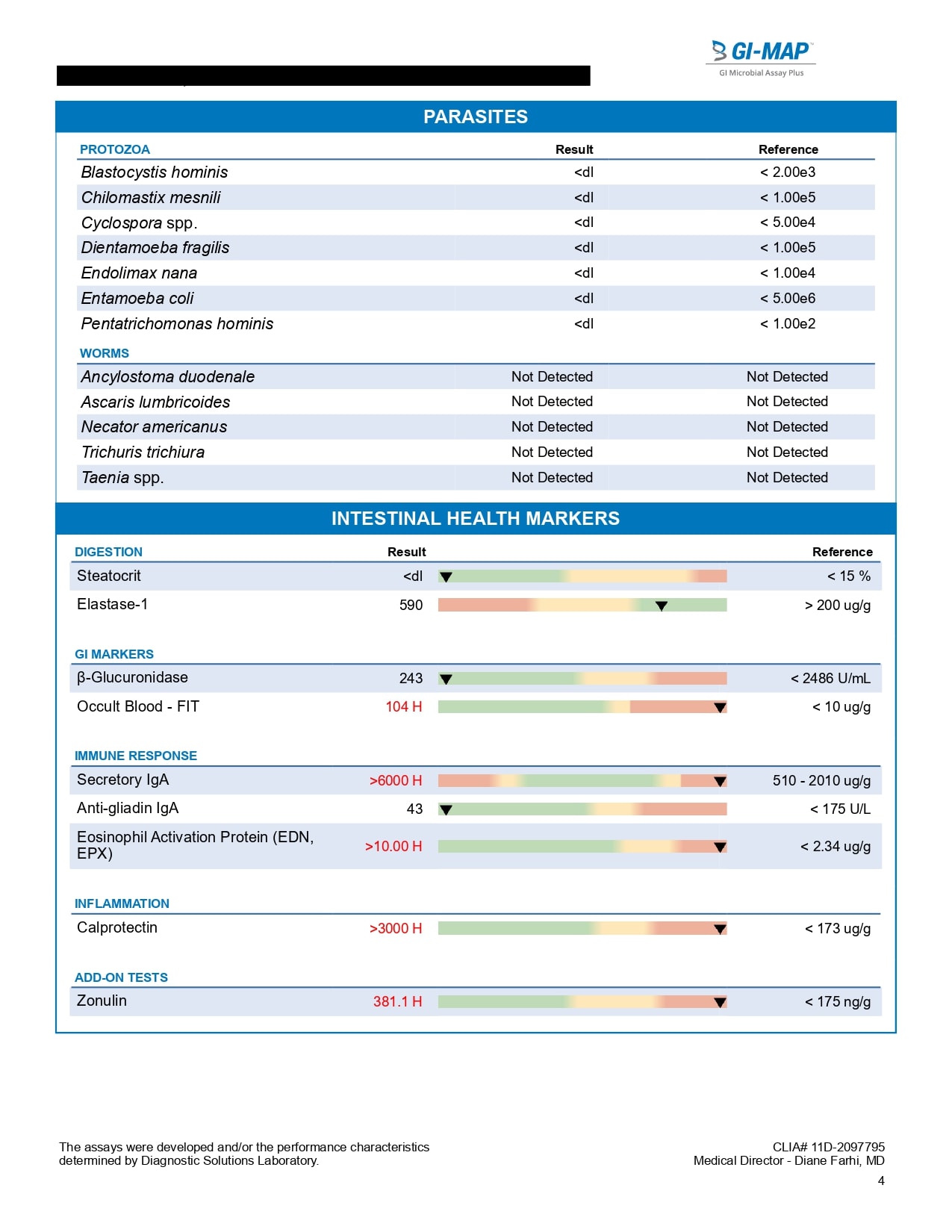
Below are pages from a real GI-MAP report by Diagnostic Solutions Laboratory. The weighted analysis program interprets these results across collective metabolic pathways — not just individual markers.
Immune Function Analysis
Weighted GI-MAP Analysis — Sample Output
Below is a weighted analysis from the program that analyzes GI-MAPs. This analysis follows the latest research and is updated consistently.
Systemic Homeostasis
Microbiome Compression / Failure to Thrive
- Bacteroidetes and Firmicutes LOW — shift towards less beneficial bacteria
Oxidative Stress
- Escherichia spp. — HIGH
- Enterobacter spp. — slightly HIGH
Hormone and Metabolic
Estrogen Dominance / Imbalance
- Evaluated via specific microbial markers
Impaired Insulin Sensitivity
- Faecalibacterium prausnitzii — slightly LOW
- Firmicutes — HIGH
Omega / Polyphenols
- Staphylococcus aureus — HIGH
- Streptococcus spp. — HIGH
- Calprotectin — HIGH
- Zonulin — HIGH
Immune
Autoimmune
- Enterobacter spp. — slightly HIGH
- Faecalibacterium prausnitzii — slightly LOW
- Secretory IgA — HIGH
Immune System Attenuation
- Escherichia spp. — HIGH
- Enterobacter spp. — slightly HIGH
- Secretory IgA — HIGH
- Eosinophil Activation Protein — HIGH
Inflammation
Inflammatory Dysbiosis
- Escherichia spp. — HIGH
- Enterobacter spp. — slightly HIGH
- Occult Blood FIT — HIGH
- Secretory IgA — HIGH
- Eosinophil Activation Protein — HIGH
- Calprotectin — HIGH
Inflammatory Dysbiosis — Opportunistic Bacteria, Yeast, and Protozoa
- Enterococcus faecalis — HIGH
- Staphylococcus spp. — HIGH
- Streptococcus spp. — HIGH
Inflammatory / Inflammation
- Bacteroides fragilis — LOW
- Escherichia spp. — HIGH
- Enterobacter spp. — slightly HIGH
- Faecalibacterium prausnitzii — slightly LOW
- Firmicutes — HIGH
- Staphylococcus aureus — HIGH
- Streptococcus spp. — HIGH
- Secretory IgA — HIGH
- Calprotectin — HIGH
Gut Barrier Integrity
Leaky Gut — Gut Barrier Permeability Pattern
- Enterococcus spp. — HIGH, Sm. Intestine
- Bacteroidetes — LOW
- Zonulin — HIGH
Low Butyrate / SCFA Production
- Faecalibacterium prausnitzii — slightly LOW
- Staphylococcus aureus — HIGH
- Calprotectin — HIGH
- Zonulin — HIGH
Low Anaerobes
- Bacteroides fragilis — LOW
- Faecalibacterium prausnitzii — slightly LOW
- Bacteroidetes — LOW
Low Mucosal Health
- Bacteroidetes — LOW
Skin / Dermis
- Enterococcus spp. — HIGH
- Escherichia spp. — HIGH
- Enterobacter spp. — slightly HIGH
- Firmicutes / Bacteroidetes Ratio — slightly HIGH
- Staphylococcus aureus — HIGH
- Streptococcus spp. — HIGH
- Zonulin — HIGH
Dysbiosis & Infection
SIBO Markers & Dysbiotic
- Enterococcus spp. — HIGH, SIBO
- Escherichia spp. — HIGH, SIBO
- Enterococcus faecalis — HIGH, SIBO
- Staphylococcus spp. — HIGH
- Streptococcus spp. — HIGH, SIBO
- Secretory IgA — HIGH
Fungal Dysbiosis
- Bacteroidetes — LOW
- Secretory IgA — HIGH
Infection
- Enterococcus faecalis — HIGH
- Secretory IgA — HIGH
- Eosinophil Activation Protein — HIGH, Viral
- Calprotectin — HIGH
Liver Support
- Enterobacter spp. — slightly HIGH
Gut Imbalance
Digestive Dysfunction Dysbiosis
- Firmicutes — HIGH
Digestive Dysfunction Dysbiosis — Opportunistic Bacteria, Yeast, and Protozoa
- Enterococcus faecalis — HIGH
- Staphylococcus spp. — HIGH
- Streptococcus spp. — HIGH
Digestive Dysfunction
- Bacteroides fragilis — LOW
- Faecalibacterium prausnitzii — slightly LOW
- Firmicutes — HIGH
Insufficiency Dysbiosis
- Bacteroides fragilis — LOW
- Bacteroidetes — LOW
- Zonulin — HIGH
Digestive Insufficiency Pattern
- Enterococcus spp. — HIGH
- Firmicutes — HIGH
- Enterococcus faecalis — HIGH
- Staphylococcus spp. — HIGH
- Staphylococcus aureus — HIGH
- Streptococcus spp. — HIGH
Halitosis
- Escherichia spp. — HIGH
- Enterobacter spp. — slightly HIGH
- Enterococcus faecalis — HIGH
- Staphylococcus aureus — HIGH
Immune Reactive & Fermentation
Gas & Histamine Producers & Mast
- Escherichia spp. — HIGH, Hydrogen Sulfide
- Enterobacter spp. — slightly HIGH, Hydrogen Sulfide & Histamine
- Roseburia spp. — slightly HIGH, Hydrogen
- Firmicutes — HIGH, Hydrogen
- Staphylococcus aureus — HIGH, Hydrogen Sulfide
- Eosinophil Activation Protein — HIGH, Mast
Lipopolysaccharide Producing, LPS (Mast Cell Activating & Inflammatory)
- Escherichia spp. — HIGH
- Enterobacter spp. — slightly HIGH
Food Sensitivity & Allergies — Histamine and MCAS
- Escherichia spp. — HIGH, Histamine
- Enterobacter spp. — slightly HIGH, Histamine
- Enterococcus faecalis — HIGH, Mast
- Staphylococcus aureus — HIGH, Mast
- Streptococcus spp. — HIGH, Mast
- Secretory IgA — HIGH
- Eosinophil Activation Protein — HIGH
- Calprotectin — HIGH
- Zonulin — HIGH
Bowel & Bladder
Bloating
- Escherichia spp. — HIGH
- Enterobacter spp. — slightly HIGH
- Faecalibacterium prausnitzii — slightly LOW
- Enterococcus faecalis — HIGH
- Staphylococcus spp. — HIGH
- Staphylococcus aureus — HIGH
Constipation
- Enterococcus spp. — HIGH
Constipation or Diarrhea
- Enterobacter spp. — slightly HIGH
- Enterococcus faecalis — HIGH
- Staphylococcus aureus — HIGH
- Streptococcus spp. — HIGH
Urinary Tract Infection — UTI
- Enterobacter spp. — slightly HIGH
- Enterococcus faecalis — HIGH
The Full Analysis Output Also Includes
Protocol suggestions for the practitioner
Targeted clinical recommendations based on the weighted findings.
Lifestyle & nutrition guidance for patients
Practical, research-backed diet and lifestyle interventions.
Full written analysis by collective functions
Narrative interpretation across metabolic pathways and system impacts.
Details per analyte with research references
Each marker explained with supporting peer-reviewed citations.
Glossary of each function and pathway
Plain-language definitions of every biological function and pathway covered.
Research Foundation
Grounded in the Latest Science
The analysis program is informed by cutting-edge research connecting the microbiome to every major body system — from musculoskeletal health to brain function and metabolic disease.

Featured Presentation
The Root Cause Roadmap: A Systemic Approach to Health Challenges & Optimization
Andrea Warrach, INHC · August 13, 2026
Chronic symptoms rarely have a single cause. For healthcare professionals working with complex, hard-to-solve cases, getting to the root often means looking beyond the standard panel. This session explores the interconnected roles of immune function, inflammation, and environmental toxicity — and offers a practical framework for testing, tracking, and addressing the underlying patterns that go unaddressed in conventional care.
The Gut–Disc Axis
Dysbiosis contributes to intervertebral disc degeneration via endotoxemia, local immunomodulation, and translocation of enteric microbes — linking gut health directly to chronic pain and musculoskeletal decline.
Read the researchDr. Paul Clayton, Pt. 1
Microbiome, Metabolome & Mental Health
Dysbiosis activates the IDO enzyme, shifting tryptophan metabolism toward kynurenine and away from serotonin and IPA — driving neuroinflammation, mitochondrial dysfunction, depression, and neurodegenerative risk.
Read the researchDr. Paul Clayton, Pt. 2
Obesity, Brain & the Gut–Hypothalamus Axis
The industrial diet disrupts GLP-1, leptin, and ghrelin signaling through dysbiosis, driving neuroinflammation, food addiction, hypothalamic damage, and long-term risk of dementia and metabolic disease.
Read the researchDr. Paul Clayton, Pt. 3
"The gut microbiota interacts with the liver, kidneys, cardiovascular system, brain, bones, and more. Analyzing it by collective function — not just species lists — is how we find the real answers."
Let's Work Together
Pricing is flexible based on volume and how we collaborate. Reach out to discuss the options that work best for your practice.